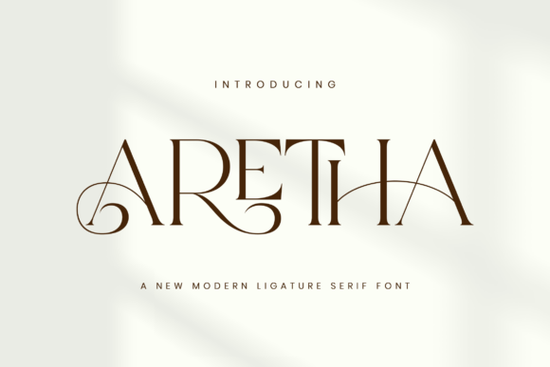
If you're looking for a serif font that feels both refined and expressive especially for fashion, beauty, or luxury branding Aretha Font is worth your attention. It’s not just another elegant typeface; it’s built with intentional contrast: sharp, precise serifs paired with fluid, hand-crafted ligatures that connect letters like delicate chain links. That balance makes it work well where personality and polish matter think boutique logos, wedding invitations, or editorial headers in lifestyle magazines.
What makes Aretha different from other modern serif fonts?
Most modern serifs lean heavily into minimalism or geometric structure. Aretha stands out because it blends tradition with movement. The high-contrast strokes give it presence on the page, while the generous x-height improves readability at smaller sizes useful for packaging or social media graphics. And those ligatures? They’re not decorative extras. They’re carefully drawn to support rhythm and flow, especially in longer words or headlines. You’ll notice them most in combinations like “fi”, “fl”, “th”, and “ct” subtle but effective when used thoughtfully.
It’s also designed with real-world use in mind. Unlike some display fonts that fall apart in body text, Aretha holds up well in medium-weight settings for short paragraphs say, an “About” section on a small business website or caption text on a product mockup. That versatility helps if you’re a print-on-demand seller needing one font that works across mugs, tote bags, and digital ads without losing its character.
Where does Aretha fit alongside other popular serif fonts?
Compared to Grove Peach Font, which has a warmer, more relaxed serif feel, Aretha reads as more structured and editorial. It’s closer in tone to Fresh Tomato Font in terms of contrast and flair but Fresh Tomato leans bolder and more playful, while Aretha stays grounded in sophistication. If you’ve used Patcher Font for vintage-inspired projects, you’ll recognize Aretha’s attention to detail but Patcher leans rustic, whereas Aretha feels contemporary and polished.
That said, Aretha isn’t meant to replace every serif in your library. It shines brightest when used intentionally as a headline font, logo lockup, or featured element not as default body text. Think of it like a signature ingredient: powerful in the right context, but best balanced with simpler, neutral fonts for supporting text.
Who benefits most from using Aretha?
- Small fashion or beauty brands building their first visual identity especially if you want something that feels custom without commissioning a full custom typeface.
- Wedding stationery designers who need elegance that doesn’t read as overly formal or dated. Its ligatures add quiet charm to names and dates.
- Print-on-demand sellers creating premium home goods or apparel Aretha adds perceived value to designs without requiring complex layouts.
- Crafters making digital downloads (like Canva templates or printable planners) who want a font that looks professionally curated, not generic.
One practical note: Because of its strong personality, pairing Aretha with a clean sans-serif like Inter, Montserrat, or even a subtle humanist option like Lora creates clear visual hierarchy. Avoid stacking it with other high-contrast serifs unless you’re aiming for deliberate tension.
How to use Aretha without overdoing it
Start simple. Try it in one place first: your logo, your main website headline, or the title on a social media post. See how it feels before expanding usage. If you’re designing for print, test it at actual size some ligatures can look cramped below 24pt depending on spacing and software. Most design tools (Canva, Adobe apps, Affinity) support OpenType features, so enable ligatures in your font panel to get the full effect.
You don’t need to use every alternate glyph or stylistic set to get value from Aretha. In fact, restraint often works better especially if you’re new to working with expressive serifs. Let the font breathe. Give it space, strong color contrast, and minimal surrounding decoration.
Before downloading or licensing, check the included weights and language support. Aretha includes regular, italic, bold, and bold italic, plus standard Latin characters and common diacritics enough for English, Spanish, French, and German use, but not extended Cyrillic or Asian language sets.
Quick checklist before using Aretha:
- Is this for a headline, logo, or short-form emphasis not long paragraphs?
- Do you have a neutral supporting font ready to pair with it?
- Have you tested ligatures turned on in your design tool?
- Does the contrast (light/dark, serif/sans) support your brand’s tone not compete with it?
- Is your file output format (PDF, PNG, web font) preserving the OpenType features you want?
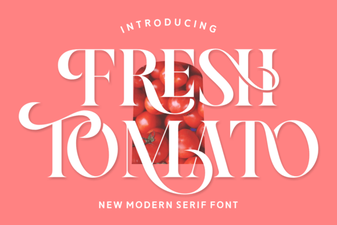 Fresh Tomato Font: a Vibrant Design Resource
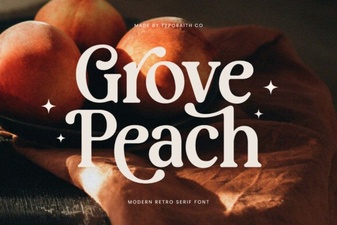 Grove Peach Font: Elegant & Versatile Design
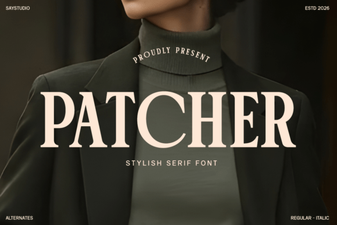 Patcher Font: Creative Typography for Design Projects
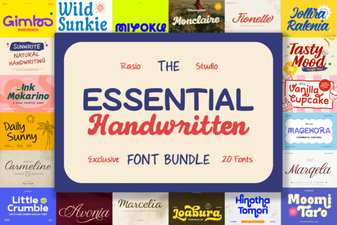 Essential Handwritten Font Bundle for Creative Projects
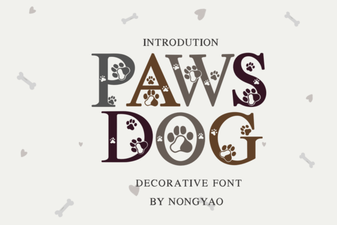 Paws Dog Font: Playful & Versatile Design Tool
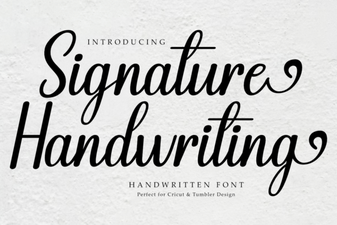 Signature Handwriting Font for Creative Projects