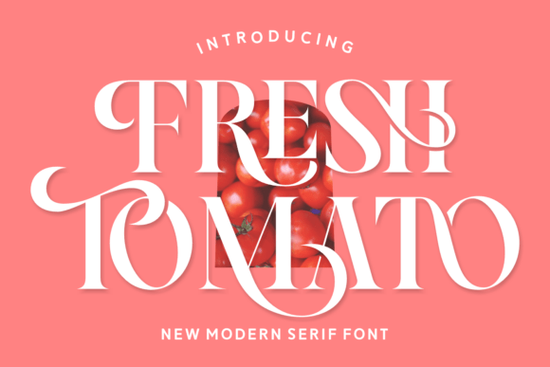
If you're looking for a friendly, warm serif font that works just as well on a wedding invitation as it does on a T-shirt print or a small-batch candle label, the Fresh Tomato Font is worth your attention. It’s not overly ornate or stiff instead, it balances soft curves with clean structure, giving text a gentle, approachable presence without sacrificing readability. Designers and crafters who value both charm and practicality often find themselves returning to this one for projects where personality matters: greeting cards, boutique packaging, social media graphics, or even hand-lettered quotes for wall art.
What kind of projects does Fresh Tomato work best for?
This font shines in contexts where warmth and sincerity matter. Think handwritten-style love letters (yes, even digital ones), baby shower announcements, or minimalist book covers for cozy romance novels. Its subtle romanticism doesn’t feel dated thanks to balanced spacing and modern proportions so it fits naturally alongside contemporary branding. Crafters using Cricut or Silhouette machines report great cut results, especially at medium to large sizes. Print-on-demand sellers appreciate how well it scales on mugs, tote bags, and notebooks without losing legibility.
Because it includes regular, italic, ligatures, and alternates, you can easily add visual interest without switching fonts. For example, use an alternate lowercase “a” or “g” in a logo lockup, or switch to italic for emphasis in a quote card. The multilingual support (including Latin Extended-A) means it handles common European accents and diacritics cleanly helpful if you’re designing for bilingual audiences or selling internationally.
How does it compare to other popular serif fonts on Creative Fabrica?
Fresh Tomato sits comfortably between classic elegance and everyday friendliness. If you’ve used Grove Peach, you’ll notice Fresh Tomato has slightly more contrast in stroke weight and a livelier rhythm less “vintage book cover,” more “sunlit café menu.” Compared to Patcher, it’s softer and less geometric; Patcher leans structured and editorial, while Fresh Tomato feels like a thoughtful handwritten note. And unlike Aretha, which carries stronger calligraphic flair, Fresh Tomato keeps things grounded making it easier to pair with sans-serif body text or neutral photography.
It’s also more versatile than many script-leaning serifs: you won’t need to swap fonts mid-project just to get a different tone. One family handles headlines, subheads, and short body copy especially when used at 16pt or larger.
Where do real users actually use it?
- Wedding stationery: Invitations, RSVP cards, and signage especially for rustic-chic or garden-themed events.
- Small business branding: Local bakeries, florists, and handmade soap labels use it for its natural, unpretentious charm.
- Digital content: Instagram quote posts, Canva templates, and email headers where warmth helps build connection.
- Apparel & merch: Works well on cotton tees and linen pouches the rounded terminals soften sharp edges, avoiding a “too crisp” look.
- Photography captions: Adds quiet personality to portfolio websites or printed photo books without competing with the image.
One thing to keep in mind: because of its delicate serifs and moderate contrast, Fresh Tomato performs best at sizes above 12pt for body text. For tiny labels or fine embroidery, test spacing and weight first or consider pairing it with a sturdier sans-serif for supporting text.
Is it beginner-friendly?
Yes especially if you're new to working with OpenType features. The standard .OTF files install and behave like any other font in Photoshop, Illustrator, or Canva (via upload). Ligatures and alternates appear automatically in apps that support them (like Adobe apps with OpenType enabled), but you don’t need to use them to get great results. Many users start with just the regular and italic weights and gradually explore extras as they get comfortable.
You can see real examples and download the full set directly from Fresh Tomato Font on Creative Fabrica. It’s also available as part of some seasonal bundles, so check the page for current offers.
Before downloading, ask yourself: • Do I need multilingual support for my audience? • Will I be printing at high resolution, or mostly using it digitally? • Am I pairing it with another font and if so, does that combo feel balanced, not busy?
Quick checklist before you use it:
- Test the font at your intended size especially for physical products.
- Try pairing it with a simple sans-serif (like Montserrat or Lato) for contrast.
- Enable OpenType features in your design app to access ligatures and alternates.
- Check licensing the standard license covers personal and commercial use, including POD, but always confirm terms on the product page.
- Save a version of your file with outlines (for print) or embed the font (for digital sharing).
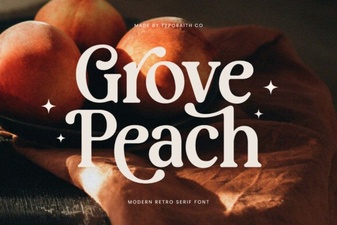 Grove Peach Font: Elegant & Versatile Design
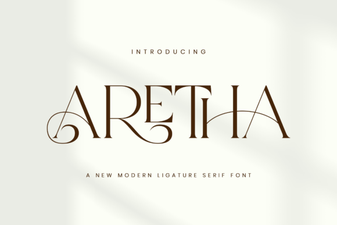 Aretha Font: Elegant & Versatile Design Inspiration
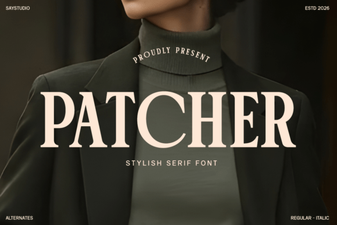 Patcher Font: Creative Typography for Design Projects
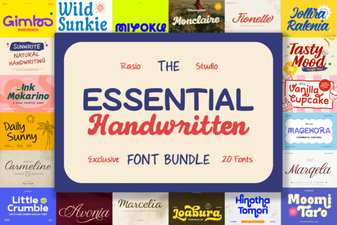 Essential Handwritten Font Bundle for Creative Projects
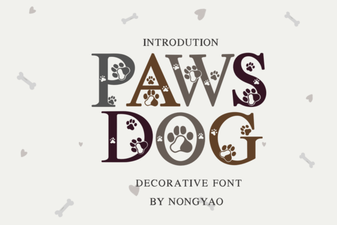 Paws Dog Font: Playful & Versatile Design Tool
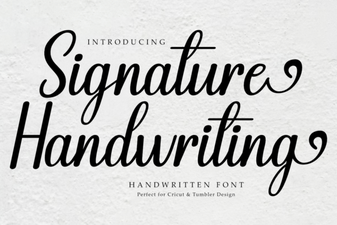 Signature Handwriting Font for Creative Projects