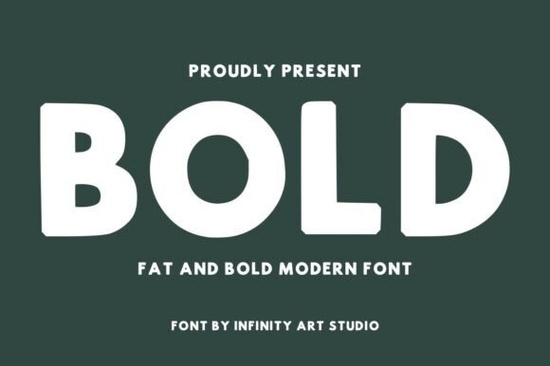
If you're looking for a strong, clean display font that works well for headlines, logos, or t-shirt designs without feeling dated or overly decorative, Bold Font is a straightforward choice. It’s not flashy it’s thick, confident, and built to be legible at large sizes. Whether you’re designing a small-batch sticker pack, updating your shop banner, or laying out a social media post, this typeface holds up without competing with your imagery or message.
What makes Bold Font work so well for real projects?
It’s designed as a fat modern display font, meaning its letterforms are intentionally heavy and evenly spaced not condensed, not stretched, just solid. That gives it stability on screen and in print. You’ll notice the uppercase letters have generous x-heights and open counters (like the inside of an “O” or “e”), which helps readability even when scaled down slightly say, for a product label or Instagram story overlay.
Unlike some bold fonts that rely on sharp angles or aggressive serifs, Bold Font keeps things minimal. No extra flourishes, no forced personality. That neutrality is actually a strength: it pairs easily with handwritten accents, vintage illustrations, or clean sans-serif body text. If you’ve ever tried pairing a loud display font with delicate line art and ended up with visual noise, this one sidesteps that problem.
Where do people actually use it?
Designers and crafters reach for Bold Font most often when they need something that says “this matters” without shouting. Here’s how it shows up in practice:
- Branding for small businesses think coffee roasters, local bakeries, or indie skincare labels wanting shelf presence
- Social media graphics, especially quote cards or limited-time offer banners where clarity trumps cleverness
- Print-on-demand products, like mugs or tote bags, where thick strokes hold up better in screen printing and DTG
- Packaging mockups, where clients want to see how a logo or product name will look in context before final production
It’s also a go-to for designers who prefer working with display fonts over full families no need to juggle multiple weights or italics. One file, one consistent voice.
How does it compare to other popular display options?
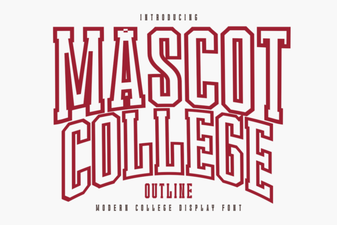
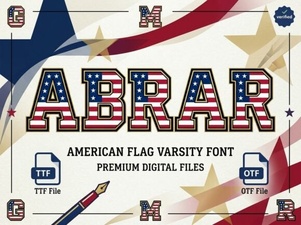
It sits comfortably between more ornamental styles and ultra-minimalist sans-serifs. For example, if you like the impact of Abrar Font but want something less geometric and more grounded, Bold Font fits that middle ground. It shares the confidence of Mascot College Outline Font, but without the outline treatment so it’s easier to layer over photos or textured backgrounds.
Compared to Cowboy Varsity Font, it’s less thematic and more versatile you won’t accidentally evoke baseball or Americana unless you pair it with those elements deliberately. And unlike distressed creative fonts, it doesn’t lean into grunge or wear so it stays fresh across seasons and trends.
You can also check out the original Bold Fat Modern Display Font on Creative Fabrica to preview samples and licensing details.
Is it beginner-friendly?
Yes if you’ve used any OpenType font before, you’ll recognize the standard character set (A–Z, 0–9, basic punctuation). No special software needed beyond what you already use: Canva, Adobe Illustrator, Affinity Designer, or even Cricut Design Space (as long as you install the .ttf or .otf file first). There are no alternate glyphs or stylistic sets to learn just one clean, consistent weight.
That simplicity also means fewer compatibility hiccups. Some display fonts break when uploaded to print-on-demand platforms due to unusual encoding or missing characters. Bold Font avoids those issues by sticking to widely supported Unicode ranges.
A quick checklist before downloading
- ✅ You need a single, strong display font not a full family
- ✅ Your project calls for clarity and presence, not novelty or nostalgia
- ✅ You’ll use it mostly at larger sizes (24pt and up for print, 48px+ for web)
- ✅ You’re okay with a neutral, modern tone not playful, not rustic, not futuristic
- ✅ You plan to use it commercially (check the license it covers POD, digital templates, and client work)
If those match your needs, Bold Font is worth trying next time you’re building a layout from scratch or refreshing an old design that feels visually tired. Start with a headline, then step back: does it feel stable? Confident? Easy to read? If yes, you’ve found your anchor typeface.
Try It Free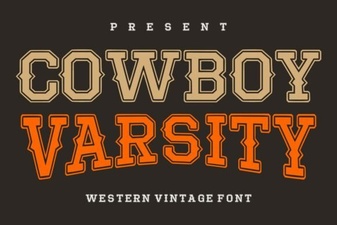 Cowboy Varsity Font: Bold & Playful Design Ideas
 Mascot College Outline Font: Creative Design Ideas
 Abrar Font: Creative Design & Typography Ideas
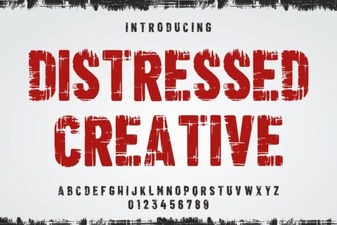 Distressed Creative Font for Bold Design Projects
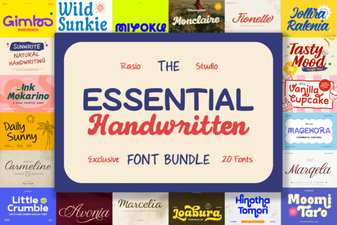 Essential Handwritten Font Bundle for Creative Projects
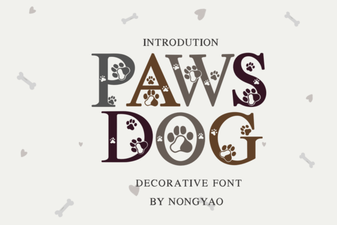 Paws Dog Font: Playful & Versatile Design Tool